
Author: Site Editor Publish Time: 2025-11-08 Origin: Site


When it comes to wood flooring installation, the method you choose has a significant impact on the performance, comfort, and appearance of your floor. The two most common installation methods are full glue-down installation and floating installation. Understanding their differences will help you achieve the best results for your space.
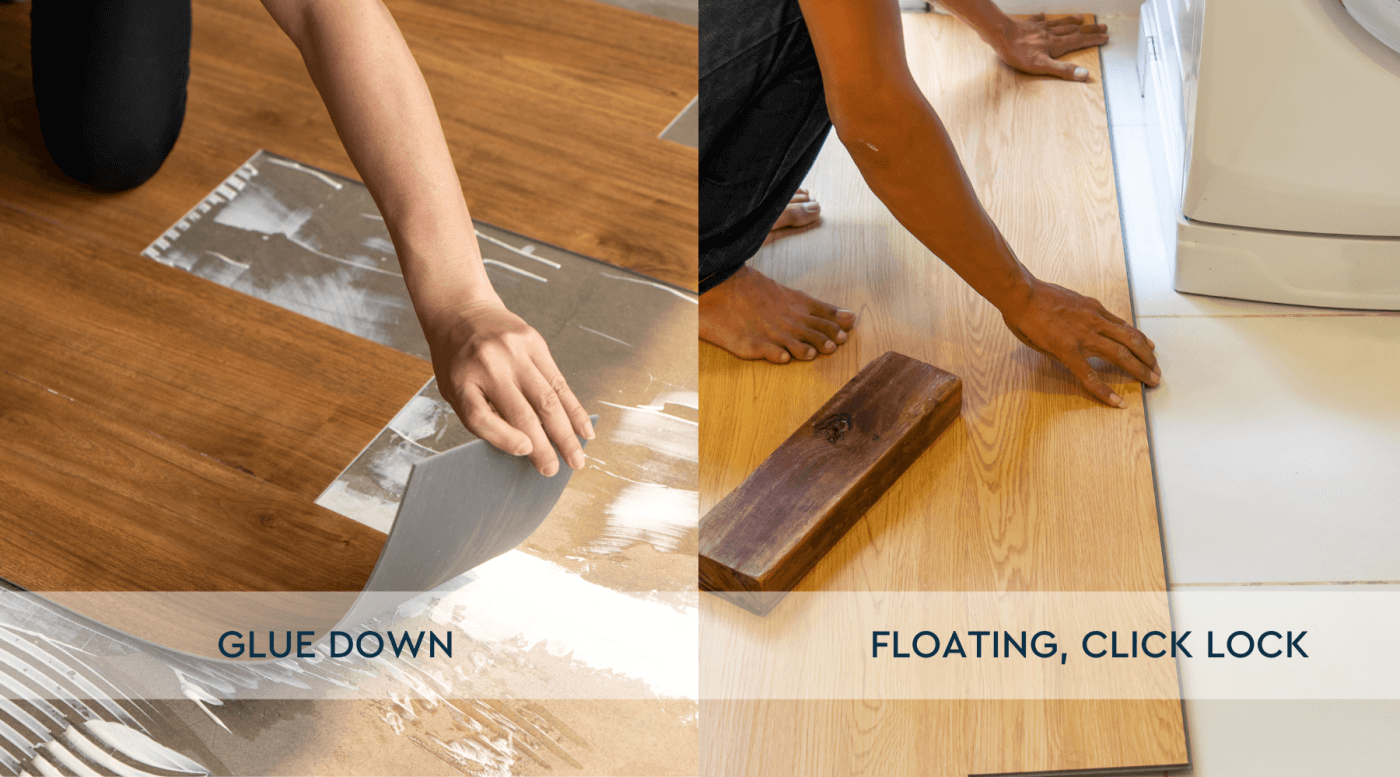
Full glue-down installation involves applying a layer of high-quality hardwood flooring adhesive evenly across the entire subfloor before laying the wood planks. This method reduces the tension between the subfloor and the wood, resulting in a firm, stable, and long-lasting installation.
Because the floor is fully bonded, the chances of “hollow spots” or loose areas are greatly minimized. The foot feel is solid and quiet, giving the space a premium and stable underfoot experience.
A good hardwood flooring adhesive plays a crucial role in the installation outcome — it firmly grips the planks while maintaining flexibility, allowing natural wood movement without causing separation or cracks. Unlike hard-setting glues, modern elastic wood flooring adhesives remain flexible over time, reducing wood expansion and contraction.
This flexibility also enables more sophisticated installation techniques, such as:
Continuous floor installation without expansion breaks across rooms
Ultra-fine edge trims and precise finishing
Direct-fit transitions and custom geometric designs
Integrated skirting and embedded moldings
With full glue-down installation, homeowners can achieve seamless design continuity and superior aesthetics — the perfect blend of design and craftsmanship.
Other than a slightly higher cost, there are virtually no downsides to this method.
Floating wood floor installation is typically used for click-lock flooring systems. In this method, a moisture-proof underlayment is laid on the subfloor, and the planks are interlocked without adhesive. It’s cost-effective and allows easy disassembly or reuse of the flooring later.
However, this method has a higher expansion coefficient. When humidity changes, the floor may expand and contract more significantly, leading to visible gaps along fine trim lines. Floating installation is also not suitable for integrated skirting, as the floor movement can cause moldings to loosen or detach over time.
To avoid such risks, it's recommended to use T-molding transitions and traditional skirting boards instead. Additionally, floating floors must follow strict dimension limits:
Maximum width: 8 meters
Maximum length: 12 meters
Exceeding these limits increases the risk of floor warping or buckling, requiring expansion joints for safety.
While floating installation is convenient and budget-friendly, full glue-down installation delivers superior stability, better acoustic performance, and unmatched design flexibility.
Choosing a high-quality wood flooring adhesive is essential — it directly affects the durability, appearance, and overall feel of your wood flooring.
For those pursuing high-end wood flooring installation, full glue-down is the best choice to ensure elegance, precision, and lasting performance.


